
- Published
- Author
- Name
- @thefireguyspdx
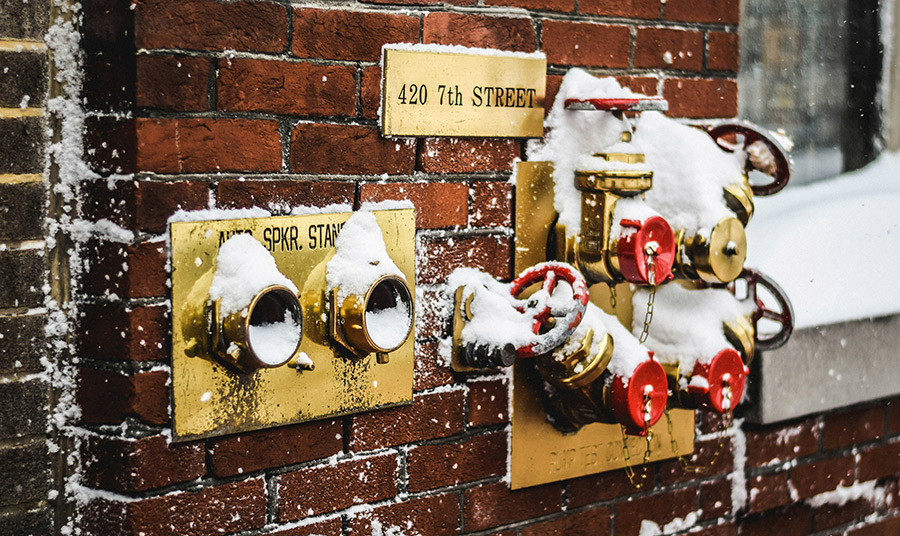 Photo by Matt Popovich on Unsplash
Yes, it's July and yes, we are talking about winterizing your sprinkler system
Just like plumbing and HVAC, fire sprinkler systems are subject to freezing.
While we see milder temperatures in the PNW than other regions, it isn't unusual for those mild winters to drop into freezing temperatures.
According to the National Fire Sprinkler Association (NFSA), lack of proper maintenance is one of the leading reasons for fire sprinkler system failures; frozen sprinkler pipes are among the more common service calls throughout winter.
During colder months, these systems are more susceptible to catastrophic failure.
With fall approaching quickly, now is the time to prepare all Wet and Dry Valve Sprinkler systems to prevent freezing.
Wet Pipe Sprinkler System
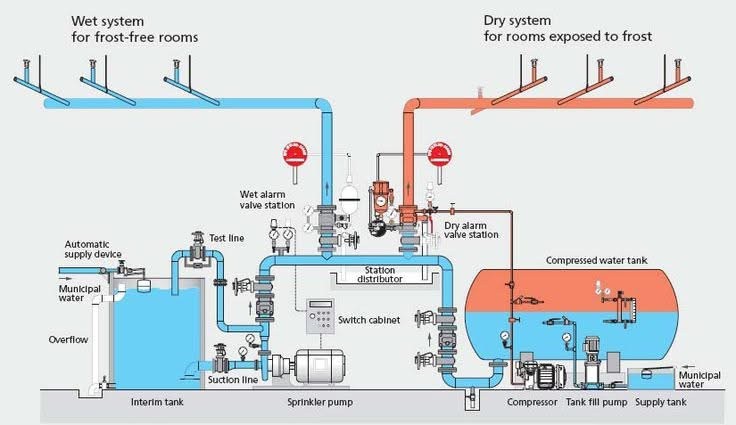
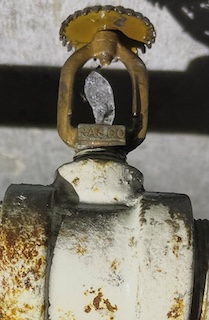
Wet pipe sprinkler systems are the most common type of sprinkler systems in use today. In wet pipe systems, the piping contains pressurized water at all times and is connected to a water supply that discharges immediately from a sprinkler head once the heat reaches a specific head and breaks the activator or temperature sensitive glass bulb.
Because these systems contain water at all times, wet pipe sprinkler systems are vulnerable to freezing.
Dry Pipe Sprinkler Systems
A dry pipe sprinkler system uses pressurized air or nitrogen in the pipe rather than water. When temperatures rise and the sprinkler heads break this air escapes and opens the dry pipe valve allowing the system to actuate. To minimize corrosion and prevent freezing of sprinkler piping, it is required that these systems always remain dry.
A dry system should be installed only where pipes are subject to freezing and is one option permitted to protect against the system freezing where the building environment cannot be maintained at or above 40°F (4°C).
How To Protect a Sprinkler System from Freezing
Wet sprinkler systems
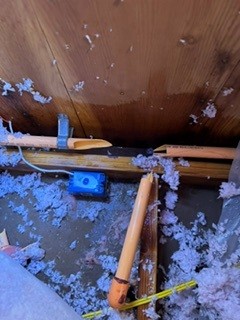
While Wet Sprinkler Systems should not be exposed to freezing temperatures sometimes it is unavoidable.
In these cases, NFPA 25 requires that heat tracing (less commonly used in the PNW) shall be inspected and maintained in accordance with manufacturer's requirements (5.2.6).
And the more commonly used method, an antifreeze system, shall be tested annually, toward the beginning of the heating season prior to the onset of freezing conditions. (5.3.4).
"Antifreeze loops," also known as "antifreeze systems," are piping arrangements that use listed antifreeze solutions to protect fire sprinkler systems from freezing.
Antifreeze loops are used in fire sprinkler systems to protect portions of piping that are exposed to freezing temperatures (such as in attics, unheated entryways, or exterior areas). Here's how they are used and arranged:
- Antifreeze loops serve as auxiliary sections of a wet pipe system where a listed antifreeze solution fills the piping in cold-exposed areas. The antifreeze prevents freezing in these segments while the main wet system carries water (1), (2), (3).
- Upon sprinkler activation (fire), the antifreeze is discharged first; water from the main supply follows, thus only a limited amount of antifreeze is released initially (1), (4).
- Antifreeze systems are typically limited to small system volumes (recommended not to exceed 40 gal/150 L), due to refill costs and practical considerations (3).
- Design requirements include a 5 ft (1.5 m) drop/U-loop in the connection to prevent mixing between water and the heavier antifreeze unless a backflow preventer is present (5). If the antifreeze system is higher than the water supply, a special check valve is added (6).
- Antifreeze systems can have unique alarms, drains, and controls to match the arrangement and ensure operational safety (1).
Please note: Sprinkler systems, including Deluge and Preaction Sprinkler Systems, must use listed antifreeze solutions with few exceptions. This change is based on research conducted by UL Solutions demonstrating that high-concentrated antifreeze solutions with high concentration of glycerin (over 50%) or propylene glycol (over 40%) can be combustible when discharged from a sprinkler onto a fire, sometimes dramatically increasing the fire's heat release rate.
Publication Resources (3,4,6) Direct Articles and NFPA Insights (1,2,5,NFPA 13D/25)
- 1. NFPA 13 (2025) 3.3.224.1 Antifreeze Sprinkler System.
- 2. NFPA 13 (2025) 8.6 * Antifreeze Systems.
- 3. NFPA 13D (2025) A.9.2.1
- 4. NFPA 13-PT (2022) 3.3.216.1 Sistema de Sprinklers Anticongelante (Antifreeze Sprinkler System).
- 5. NFPA 13D (2022) 9.2.3.1 Connections Between Antifreeze System and Wet Pipe System with No Backflow Prevention Device.
- 6. NFPA 13D (2025) 9.2.3.1.2
- NFPA 13D (2022) 9.2 * Antifreeze Systems.
- NFPA 25 (2026) 5.3.4.2
- NFPA 25 (2026) 3.6.4.1 Antifreeze Sprinkler System.
Dry pipe sprinkler systems
The standing requirement is in its name - Dry Pipe Systems - it needs to remain dry and required to be maintained as such. Because condensation can build up and pool in low points it is necessary to drain them manually.
Allowing pooling to accumulate may result in water freezing within the pipes, draining of the low point can alleviate this potential freezing. Heating the area where the control valve is housed to at least 40 degrees (F) will also facilitate a drier system.
To recap
The National Fire Protection Association (NFPA) provides several strategies and requirements, primarily found in NFPA 25 (Inspection, Testing, and Maintenance of Water-Based Fire Protection Systems) and referenced installation standards:
- Wet Pipe Systems:
- Should not be exposed to freezing temperatures. Where this is unavoidable:
- Heat tracing shall be inspected and maintained in accordance with manufacturer's requirements. (NFPA 25: 5.2.6).
- Use only listed antifreeze solutions, tested for appropriate freeze points (NFPA 25: 5.3.4).
- Should not be exposed to freezing temperatures. Where this is unavoidable:
- Dry Pipe Systems:
- Piping must be pitched to drain, sometimes requiring manual draining using drum drips (low point drains).
- Water accumulation due to condensation/testing should be removed before freezing weather (NFPA 25, Chapter 13).
- Ensure control valves are housed in heated enclosures (NFPA 25, Chapter 13).
Other noteworthy systems that require consideration in the coldest months
- Water Tanks:
- Storage tanks supplying sprinkler systems must be heated to maintain water at or above 40°F (4°C).
- Low and high-temperature alarms must be tested before the heating season (NFPA 25: 9.2.3, 9.3.3, 9.3.4).
- Hydrants and Water Supplies:
- Hydrants should be checked for proper drainage and flagged for visibility in snow (NFPA 25: 7.3.2.3; NFPA 1:18.5.10.2).
- Natural water sources (ponds, lakes) must be evaluated for adequate water below ice thickness (NFPA 24 Chapter 5 revision in progress).
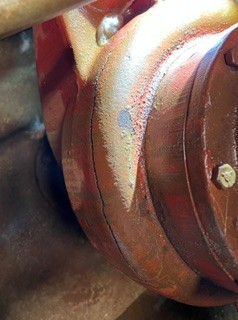
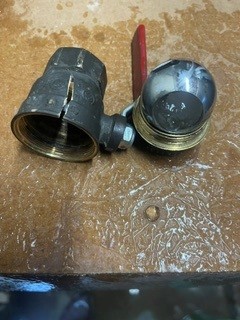
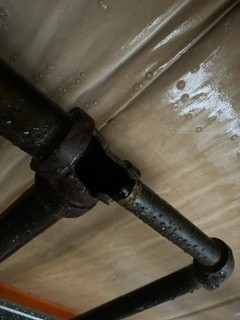
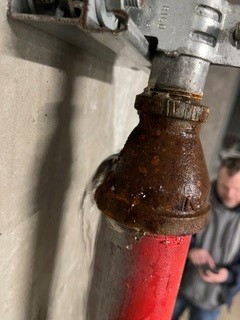
As property managers and owners, it is likely that a problem with the system may not be apparent until temperatures rise from above freezing levels, due to ice plugging up any breaks in the pipes.
Avoid costly repairs and schedule your Annual Sprinkler Winterization with Metro Safety & Fire, Inc. today.
Helpful Links
Notable NFPA articles