
- Published
- Author
- Name
- @thefireguyspdx
 Courtesy of NFPA
What is a Fire Sprinkler System?
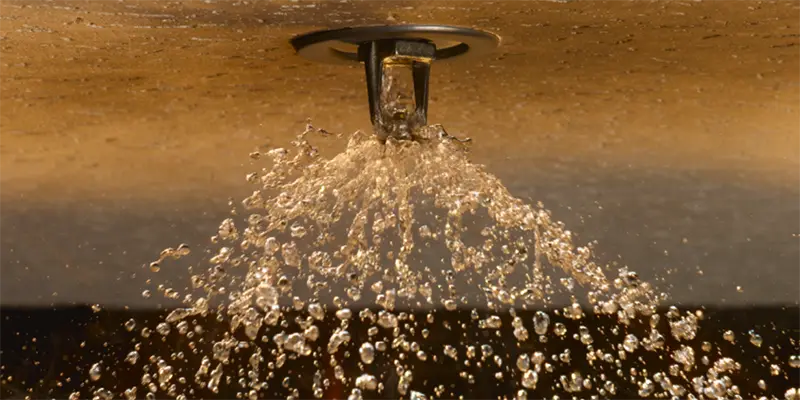
A fire sprinkler system is a simple, yet essential, element of a building's fire protection system. The system includes a water supply, a distribution piping network and sprinkler heads installed in ceilings or sidewalls. When heat is detected, the sprinkler will activate automatically.
There are Four Types of Sprinkler Systems
Wet Pipe. This is the most common system in use. Pressurized water is directed through pipes to the activated sprinkler heads in order to release water.
Dry Pipe. Dry systems are primarily used where there is considerable danger of pipes freezing. The pipes are filled with air under pressure, which keeps the water from flowing through them until a fire is detected. When the sprinkler head is activated, the air leaks out, allowing the water to flow.
Pre-action Systems. With a pre-action system, water is held back from the piping by an electronic valve and released when heat is detected. The sprinkler head must also be activated before water is released. This system is primarily used where accidental discharges must be prevented.
Deluge Sprinkler System. The deluge system is similar to the wet pipe system, but with two key differences: The sprinkler heads are always open, and the water is released to the entire system when smoke or heat is detected.
How Do Sprinkler Systems Work?
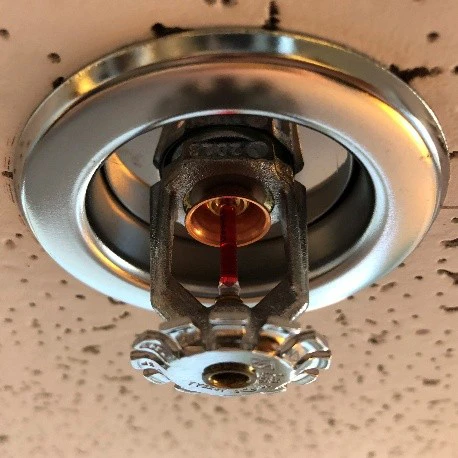
When a sprinkler is activated, a plug is released, and water moves through an orifice at a certain flow and pressure. That water then collides with the deflector which is designed to create a certain spray pattern. Most sprinkler spray patterns fall into one of the following categories.
Standard Spray Sprinklers
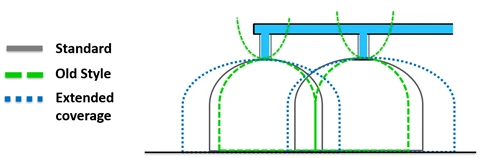
The standard spray sprinkler is installed in accordance with specific coverage area limitations and is available in pendant, upright, and sidewall configurations. Because the standard spray sprinkler is proven to be effective for a broad range of hazards and applications by adjusting the water discharge density, it is popular and, to a certain degree, serves as the benchmark for sprinkler measurement and performance.
Extended Coverage Sprinklers
As the title suggests, these sprinklers have a larger, or extended, coverage area when they discharge. This can help save material and labor costs because you do not need to install as many sprinklers. The trade-off is that they might require a water supply with a higher pressure to discharge at the higher flow rate necessary to cover the larger area they were designed for. Extended coverage sprinklers also come in several orientations and response types.
Old Type Sprinklers
Old style sprinklers are only permitted for special situations such as the protection of fur storage vaults. These sprinklers have a unique water distribution, where about half the water is directed upwards and half is directed down. This typically allows these sprinklers to be installed in either the pendant or upright position.
Who Regulates the Requirements for Fire Sprinkler Systems?
The NFPA 13, Standard for the Installation of Sprinkler Systems, is one of the most widely used standards for small businesses. These standards establish the methods and conditions for installing sprinkler systems and provide builders, owners, and managers with a consistent framework for meeting or exceeding fire safety criteria.
Which Commercial Buildings Should Have a Sprinkler System?
Various local, state and federal rules will dictate the type of buildings that must be protected with a sprinkler system. These standards need to be followed carefully in order to meet your area's safety standards, as well as building codes. The following are some of the significant fire sprinkler requirements for commercial buildings from NFPA 13:
- All new commercial structures with a fire area of more than 5,000 square feet must have automatic fire sprinkler systems installed.
- Any remodeling or expansion that extends the fire area beyond 5,000 square feet, or any single tenant increase in occupancy requiring a new certificate of occupancy, will require sprinkler systems to be installed throughout the building.
- Buildings more than 55 feet tall must have automatic sprinkler systems installed in all of the structures.
- Sprinkler systems are required in townhomes with more than two residential occupancy units within a structure.
Sprinkler Systems Effectiveness
NFPA evaluated sprinkler system performance in a study completed on 49,840 fires in sprinklered buildings from 2010 to 2014. The report and fact sheet for the study can be found in the NFPA U.S. Experience with Sprinklers. The study found:
- Only one operating sprinkler was required to control the fire in four out of five fires, 79%.
- In 97% of fires, five or fewer operating sprinklers were required to control the fire.
- Sprinkler protection was present in about 10% of the structure fires reported.
- The civilian death rates were 89% lower in properties with sprinkler protection than those without.
- In sprinklered properties, the injury rate was 31% lower for building occupants and 48% lower for firefighters.
Effectiveness in Commercial Settings
- Fire sprinklers are required in many commercial buildings, including hotels, warehouses, and office spaces, due to their proven safety benefits.
- Businesses with sprinkler systems experience less downtime and monetary loss after a fire.
- Sprinklers reduce heat, smoke, and flame spread, allowing firefighters to control fires more easily.
The Proven Benefits of Sprinklers
Life Safety
The NFPA in the same study (U.S. Experience with Sprinklers) shares that risk of dying, injury to persons and injury to fire fighters are 90%, 32% and 30% respectively, lower in properties with sprinklers. This dramatic reduction occurs because sprinklers control or extinguish fires in their early stages, preventing the rapid spread of deadly smoke and toxic gases.
Property Protection
Sprinklers limit fire damage significantly, often containing a blaze before firefighters arrive. The average fire loss in sprinklered buildings is typically 70% lower than in non-sprinklered structures. This can reduce repair costs, minimize business interruption, and keep operations running with minimal downtime.
Insurance Advantages
Many insurers offer reduced premiums for properties with compliant sprinkler systems, recognizing the dramatically lowered risk. These savings often offset installation and maintenance costs over time, making sprinklers a sound financial investment beyond their safety benefits.
Fire Sprinklers Save Lives and Money: The Economics of Retrofit
Code Compliance
Sprinklers are required in many occupancies under local building codes including high-rise buildings, healthcare facilities, and large commercial spaces. NFPA 1 4.1.1* Goals specifies that: The goals of this code shall be to provide a reasonable level of safety, property protection, and public welfare from the hazards created by fire, explosion, and other hazardous conditions. NFPA 13, 13R outline specific requirements for installation by building type.
Environmental Benefits
Greenhouse gas emissions were cut by 97.8%. Water usage was reduced between 50% and 91%. Fewer persistent pollutants, such as heavy metals, were found in sprinkler wastewater versus fire hose water. USA Fire Protection
Sprinkler System Reasons for Failure
The study also reviewed why sprinkler systems failed. Sprinkler system failure means the sprinkler did not activate or operate. Over three-fourths of system failures could be attributed directly to inspection, testing, and maintenance issues. In cases examined:
- The sprinkler system water supply valve was shut off - 59%
- A lack of maintenance - 10%
- System components were damaged - 7%
This data clearly shows the need for a sound maintenance program to keep the sprinkler system in good working order.
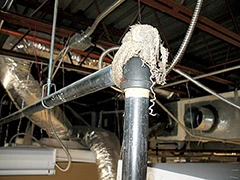
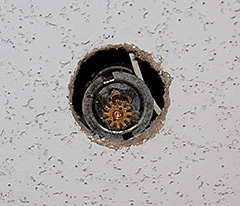
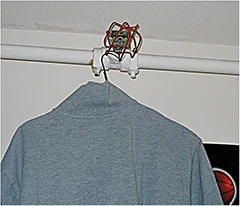
Fire Sprinkler Systems Need to be Tested & Inspected Regularly with Systems on Intervals of Quarterly.
Know the Regulations
- NFPA 25 Standard for the Inspection, Testing, and Maintenance of Water-Based Fire Protection Systems https://link.nfpa.org/publications/25/2026 will have all you need to know for inspections for compliance. Free access NFPA codes and standards
- The AHJ in your area can help determine the frequency needed for your unique commercial property.
Hire a Company
- At Metro Safety & Fire, Inc. our technicians are specifically trained to provide thorough technical inspections, test, and maintain your fire suppression systems for your commercial property, following the fire codes provided by the National Fire Protection Association
Commit to Routine Maintenance
- Leave the reminders to us. Metro Safety & Fire, Inc. makes annual inspections easy to schedule with our recurring calendar. We will reach out about 6 weeks in advance of your inspection to coordinate a time that works well for your facility.
Lock Control Valve in the Open Position
- Have a regular maintenance plan in place to ensure your system is ready to actuate when necessary. An NFPA study shows that three out of five fires in which sprinklers did not engage, the system had been shut off
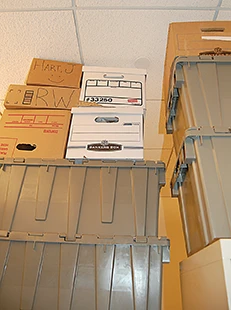
Keep Combustible Materials Off Ceilings
- You are required to maintain at least 18 inches of clearance between stacked items and ceilings in rooms equipped with fire sprinklers. In rooms without sprinklers, the clearance requirement increases to 24 inches.
Make a Commitment to Protect Your Community
Fire sprinklers are one of the most effective fire protection measures for commercial properties. Designed to detect heat and release water in the early stages of a fire, they can significantly reduce property damage, prevent injuries, and save lives. For over 40 years Metro Safety & Fire, Inc. has helped establish fire life safety inspections for local companies ranging from Salem to Longview and Mt. Hood Recreational Area to Newberg. We are happy to add your company's portfolio to the growing number of satisfied customers. Give us a call - we are here to help!
Test Your Knowledge with a Few Fun Facts About Sprinklers
True or False?
Automatic sprinkler systems are relatively new to fire life safety coverage.
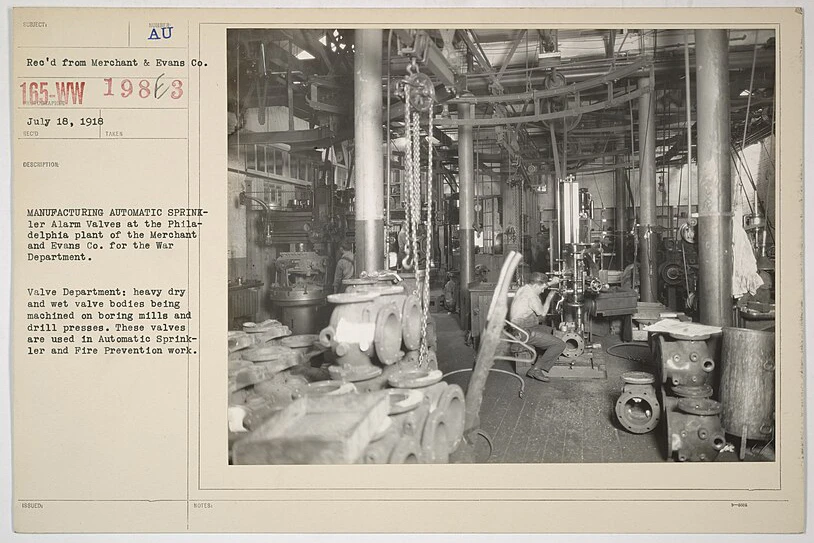
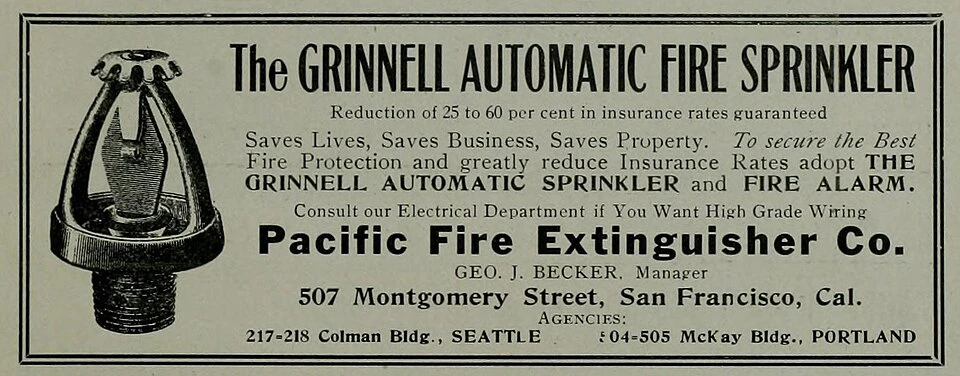
False: Automatic fire sprinklers have been in use in the U.S. since 1874. That is over 150 years!
Sprinklers require no electricity to function.
True: It requires no electricity and actuates solely on thermal activation and pressure.
Sprinklers accidentally discharge
False: International statistics indicate this occurs in only one out of every 500,000 sprinklers per year of service. Another study found that the chances of a sprinkler activating due to a manufacturing defect are approximately 1 in 16M per year in service.
Sprinklers activate when smoke, cooking vapors or steam trigger them.
False: Sprinkler heads are individually activated by fire. When triggered by heat (135°F to 165°F) the temperature sensitive glass bulb bursts, activating the system.
When a fire occurs, every sprinkler head on the system activates.
False: Water flows only from the individual sprinkler head activated by heat.
With exception: Deluge systems are strictly used in high-hazard, industrial environments where fires can spread rapidly. When the detection panel triggers the release, the deluge valve opens, allowing water to rush through the unpressurized pipes and discharge simultaneously from all nozzles. Which must be in every building in any movie you have seen. /s
https://www.youtube.com/shorts/Dm9Khx313OY
It only takes one sprinkler to put out a fire.
True: One sprinkler is usually enough to control a fire. In 77 percent of the structure fires where sprinklers operated, only one operated. In 96 percent, five or fewer operated. In 98 percent, 10 or fewer operated.
Water damage from a sprinkler system will be more extensive than fire damage
False: Water damage from a sprinkler system will be much less severe than the damage caused by water from fire-fighting hose lines or smoke and fire damage if the fire goes unabated. Quick response sprinklers release 8-24 gallons of water per minute compared to 50-125 gallons per minute released by a firehose.
https://www.instagram.com/reel/DOhDMSAgIny/
A smoke detector provides enough protection, no need for sprinklers, too.
False: Smoke detectors save lives by providing a warning system but can do nothing to extinguish a growing fire or protect those physically unable to escape independently, such as the elderly or small children.
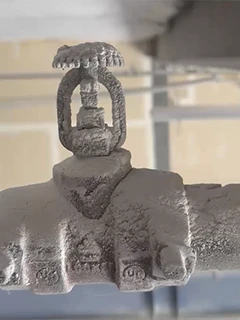
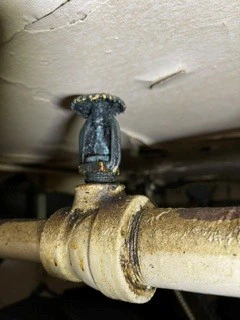
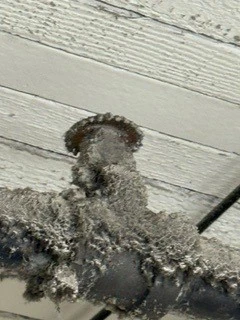
Accumulations of dust, debris, or any paint not applied by the manufacturer can negatively affect a fire sprinkler's ability to operate properly during a fire.
True: "Loaded" sprinklers (heavily covered in dust or debris) and aftermarket paint can insulate the heat-sensitive element (delaying activation) or clog the deflector (blocking the water spray pattern). Any sprinkler with performance-hindering loading or paint must be replaced.
Helpful Links
Your local Fire Marshal
- Oregon State Fire Marshal
- Washington State Fire Marshal's Office
- Contact Us - Washington State Patrol
- For all questions relating to the Fire Marshal's office, contact their HQ:
- Phone: (360) 596-3900
- Email: Firemarsh@wsp.wa.gov
The More You Know
- History of Simple Things: How a fire sprinkler works
- How Does a Fire Sprinkler System Work? The Silent Guardian Above Your Head
- Wet Pipe Sprinkler System - How They Work - NFPA