
- Published
- Author
- Name
- @thefireguyspdx
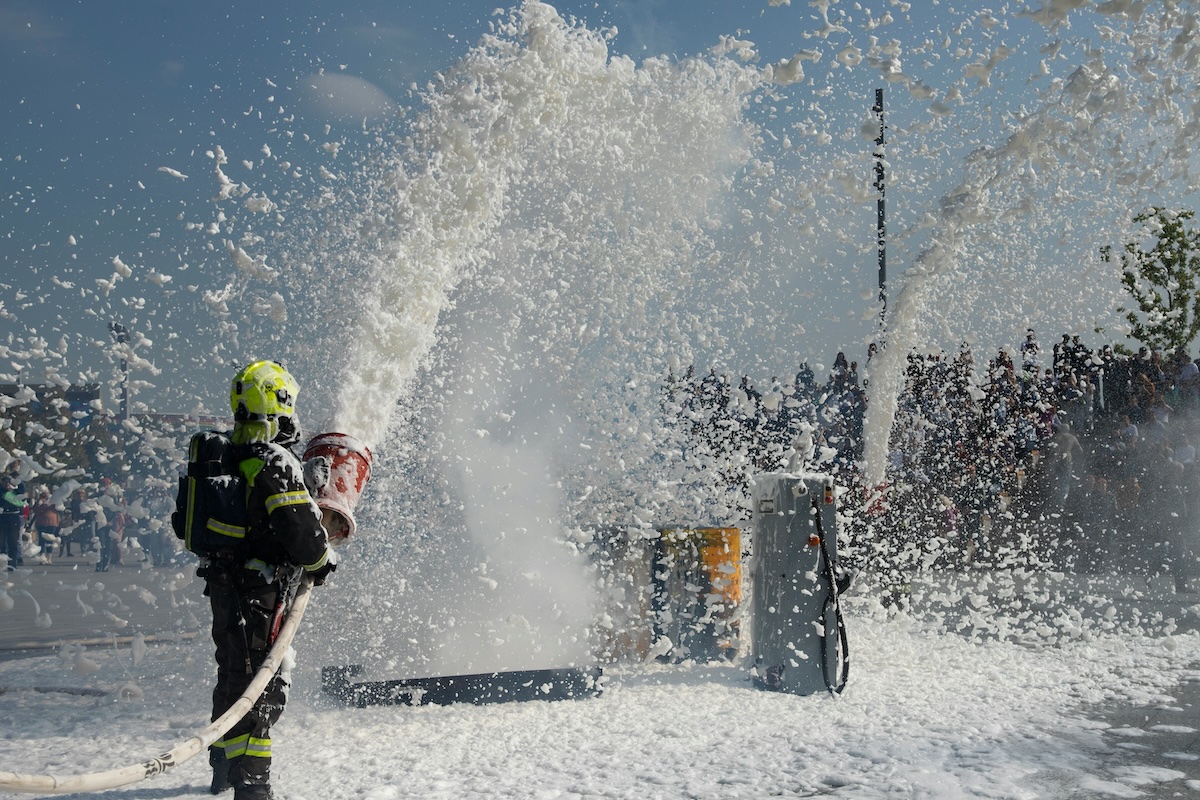 Photo by Maria Baranova on Unsplash
Fire Suppression Chemicals are Phasing Out for Safer Alternatives
Since their origin beginning in the 1940's, halon fire suppression agents - chemicals containing bromine, fluorine, and carbon suppress fires by chemically interrupting the combustion process.
Common types are:
- Halon 1211 (liquid streaming agent in handheld units) and
- Halon 1301 (gaseous flooding agent in fixed systems)
These widely used agents throughout the mid-20th century effectively suppressed fires stemming from flammable liquids and electrical fires (B:C rating) leaving no residue, making them safe for use in sensitive environments like aircraft, data centers, and electronics rooms.
However, in 1974 chemist Frank Sherwood Rowland of the University of California, Irvine and his post-doctoral student, Mario J. Molina, suggested that long-lived organic halogen compounds, such as chlorofluorocarbons (CFCs), could reach the stratosphere where they would be dissociated by UV light, releasing chlorine atoms.
By 1990, Congress had amended the Clean Air Act with Title VI, with provisions for protecting the ozone layer. These amendments require the EPA to develop and implement regulations for managing ozone-depleting substances ( ODS ) in the United States. They also ensure the United States' commitment to implementing the Montreal Protocol, a landmark multilateral environmental agreement that regulates the production and consumption of nearly 100 man-made chemicals referred to as ozone depleting substances.
Under this authority, several regulatory programs, including an ODS Phase Out, Exemption, Import/Export and Destruction Programs have been implemented. This also includes the Halons Program.
Halon agents are potent ozone-depleting substances and have a very high global warming potential (GWP). When released into the atmosphere, they rise to the stratosphere, where they break down to release chlorine and bromine atoms that catalytically destroy ozone molecules. This ozone layer protects Earth from harmful ultraviolet (UV) radiation.
As a result, on January 1, 1994, production and import of virgin halons were phased out in the United States. Since that time, recycled halons are the only supply of halons in the United States for specialty fire suppression applications.
While alternatives are available for most halon-based fire extinguishing applications, halons are still employed for important applications such as on civil aircraft, in legacy military systems, and for oil and gas exploration.
Sources of recycled halons include stockpiles and recovered agent from cylinders collected from decommissioned systems both in the United States and abroad.
For many, the Halotron, a clean, gaseous fire extinguishing agent designed to suppress fires without leaving residue or damaging sensitive equipment, was the overall choice. It works by interrupting the chemical chain reaction of combustion and absorbing heat, effectively extinguishing fires while leaving virtually no residue.
It was developed as an environmentally friendlier replacement for halon-based extinguishers, offering a significantly lower ozone depletion potential (ODP) and global warming potential (GWP) compared to older halon agents.
Unfortunately, Hydrofluorocarbons (HFC) are found to be potent human-made greenhouse gases, and their use is also being regulated under different frameworks (like the Kigali Amendment to the Montreal Protocol) due to their global warming potential (GWP). New regulations are phasing down HFC use, making it crucial to select agents with lower GWPs or explore newer alternatives.
Phaseout of ODS Under the Clean Air Act | US EPA
Safe, Effective, and Legal Fire Suppression
The good news is that the world of fire suppression has moved beyond Halon and Halotron Fire Suppression, offering a range of effective and environmentally conscious alternatives. When replacing your current fire extinguishers or outfitting a new space, you'll want to consider these options based on the type of fire hazards present.
Clean Gases
These are gases that suppress fires without leaving residue. They are the closest modern equivalent to halon in terms of their ability to protect sensitive equipment.
CO2 Extinguishers
As a clean agent, carbon dioxide extinguishers are effective for Class B and Class C fires. They extinguish fires by displacing oxygen and cooling the fuel. They leave no residue, making them suitable for protecting electrical equipment and sensitive electronics. However, they can be dangerous in occupied spaces as they displace oxygen, and they are less effective in windy or open areas.
(Deionized) Water Mist Extinguishers
These use a fine mist of deionized water, which is highly effective at cooling and displacing oxygen. They are environmentally friendly, leave minimal water residue, and are safe for use on Class A and some Class C fires (due to the fine mist of deionized water being non-conductive, though this should be verified for the specific model). They are a great alternative for areas where water damage is a concern, but clean agents are not practical or cost-effective.
Dry Chemical Extinguishers
These are the most common type of portable fire extinguisher and are highly effective for a wide range of fires. They work by interrupting the chemical chain reaction and smothering the fire. They are not, however, a clean agent nor do they follow the same protection logic as the above fire suppression.
- ABC Dry Chemical: This is the most versatile type, effective on Class A (ordinary combustibles like wood, paper), Class B (flammable liquids like grease, gasoline), and Class C (electrical fires) fires. It uses monoammonium phosphate as the extinguishing agent. The main drawback is that it leaves a powder residue that can be corrosive to electronics and difficult to clean up.
- BC Dry Chemical: These are effective on Class B and Class C fires. They typically use sodium bicarbonate or potassium bicarbonate.
- D Dry Chemical: Specifically designed for Class D fires (combustible metals like magnesium, titanium, sodium). These are specialized and not for general use.
Other Agents That Have Given Pause in Fire Protection Services and Beyond
PFAS-based Foams (AFFF): Aqueous Film-Forming Foams containing long-chain PFAS (like PFOS, PFHxS, and PFOA) face strict prohibitions and regional bans (with major restrictions rolling out across the EU and U.S. markets). Regulations target the manufacture and sale of portable extinguishers holding these specific chemical concentrations.
This "forever chemical" is a group of highly stable synthetic chemicals that have historically been widely used at military bases, airports, refineries, and firefighting training facilities. However, due to environmental and health concerns, the Department of Defense and other agencies are phasing out PFAS-containing foams. The foam is effective but also poses significant environmental and health risks due to their persistence and bioaccumulative nature.
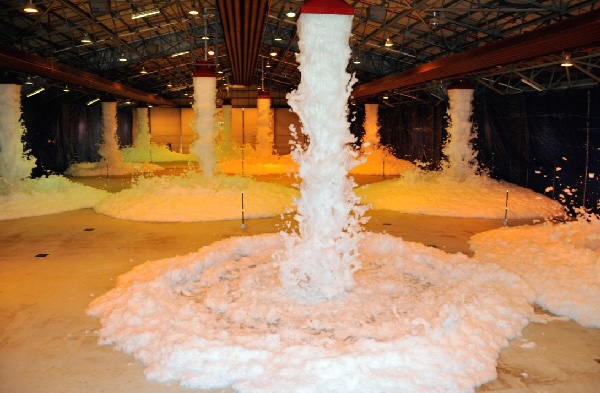
In May of 2025 Oregon joined 15 other states to phase out firefighting foam containing these toxic “forever chemicals” - PFAS, except when required by the Federal Aviation Administration or other federal laws.
The use of firefighting foam containing PFAS foam puts our waterways at risk and also endangers our firefighters, who are at increased cancer risk due to exposure to PFAS. In fact, cancer is the leading cause of death among firefighters in the United States, according to the Firefighter Cancer Support Network and the International Association of Fire Fighters. Governor Kotek signs bill to ban firefighting foam containing PFAS.
Fire Fighting Foam Restrictions | Environmental Protection Agency
Stockholm Convention on Persistent Organic Pollutants (POPs) Recommendations
These chemicals are not limited to fire suppression. Yale Sustainability explained the challenges posed by PFAS and potential solutions for reducing exposure.
Vasilis Vasiliou is Department Chair and Susan Dwight Bliss Professor of Epidemiology at Yale School of Public Health (YSPH) sat down with Robert Bilott an environmental attorney that serves as a lecturer with the YSPH Department of Environmental Health Sciences.
Bilott's story and landmark case against chemical giant DuPont were recounted in his book, “Exposure: Poisoned Water, Corporate Greed, and One Lawyer's Twenty-Year Battle Against DuPont,” and were the basis for the 2019 motion picture “Dark Waters,” starring Mark Ruffalo.
“BILOTT: PFAS have been used in an incredible array of consumer and commercial products since the 1940s. Common products containing PFAS include non-stick cookware, carpeting, clothing, fast food wrappers and packaging, computer chips, toilet paper, and waterproof cosmetics. Keywords like stain-resistant, waterproof, grease-resistant, and non-stick often indicate the presence of PFAS. These chemicals were not listed on ingredient lists or labels, and many companies were unaware they were using them.”
You can read the interview in its entirety at Yale Experts Explain PFAS 'Forever Chemicals'
When Making the Switch
When selecting an alternative fire suppression agent or gas, it's essential to consult with a qualified fire protection professional and your Fire Marshal's Office/AHJ (Authority Having Jurisdiction). They can assess your specific risks, the types of materials and equipment you need to protect, the layout of your space, and your budget to recommend the most appropriate and compliant fire suppression solutions.
Metro Safety & Fire, Inc. is committed to providing you with the most up to date information combined with our expertise to guide you to make an informative decision for your unique location. Reach out today!
The More You Know
- Montreal Protocol
- Kigali Amendment to the Montreal Protocol
- Halons Program | US EPA
- Phaseout of ODS Under the Clean Air Act | US EPA
- Substitutes in Streaming Agents | US EPA
- AFFF_PFAS_FactSheet_Sept2023_final
- Significant New Alternatives Policy (SNAP) Program | US EPA
- Substitutes in Fire Suppression and Explosion Protection | US EPA
- GAO-24-107322, FIREFIGHTING FOAM: DOD Is Working to Address Challenges to Transitioning to PFAS-Free Alternatives
- Designation of Perfluorooctanoic Acid (PFOA) and Perfluorooctanesulfonic Acid (PFOS) as CERCLA Hazardous Substances